

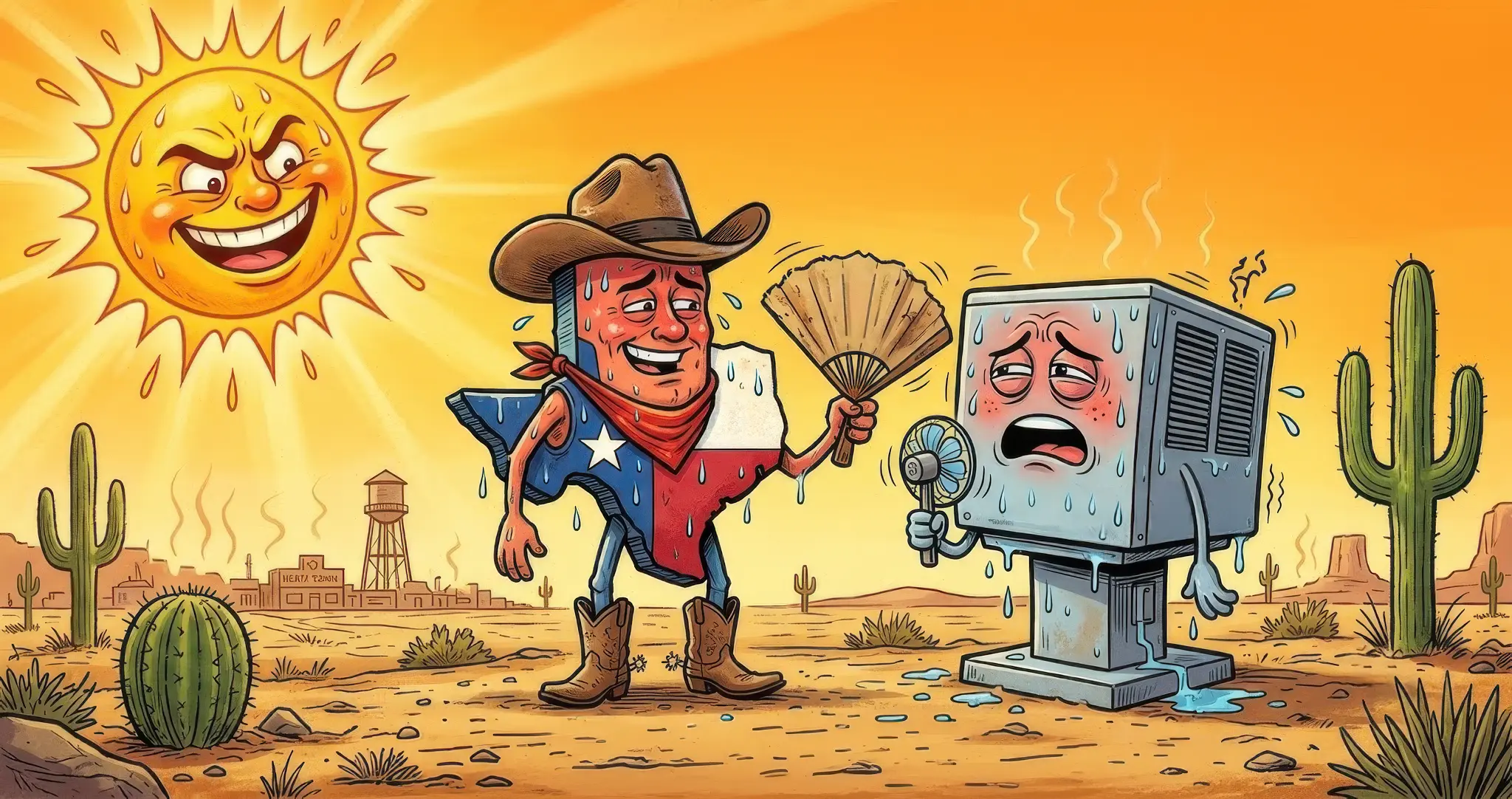
A summer afternoon in Paradise, TX has a way of putting every air conditioner in town to the test. The house felt fine at breakfast, the system seemed to be earning its keep, then late afternoon rolls in and the living room turns warmer than it has any right to be. The thermostat claims one thing, the air drifting from the vents says another, and the outdoor unit sounds like it hasn't stopped running since sunrise.
A day like that can make any homeowner wonder if the AC is on its way out.
Sometimes it is. Sometimes the system is just wrestling brutal Texas heat, heavy demand, dust, weak airflow, and a house that's soaking up heat faster than the equipment can shed it. Telling those apart matters. A healthy air conditioner may run longer during extreme heat, but it should still cool the home, move air properly, and do it without strange noises, ice, repeated shutdowns, or a sudden jump in energy use.
For homeowners in Paradise and the wider North Texas area, summer cooling isn't a luxury. It shapes your comfort, your sleep, your indoor air quality, and your monthly bill. This month, Empire Heating & Air wants to share a few practical habits help your system keep pace, and the right service at the right time keeps a stressful breakdown from landing in the hottest stretch of the year.
Why Extreme Heat Pushes Your AC So Hard
Your air conditioner doesn't make cold air the way most people picture it. It pulls heat out of your home and dumps it outdoors. On a mild day, that's a manageable job. On a 100-degree afternoon, the outdoor unit has to shove that heat into air that's already scorching.
That's where the strain kicks in.
The hotter it gets outside, the harder the condenser, compressor, and fan motor have to grind. The system runs much longer than usual because it's trying to pull indoor heat out faster than the house takes it in. Sunlight pouring through windows, a baking attic, leaky ducts, a dirty filter, and heat off your appliances all pile onto the load.
That's why so many homeowners watch their AC lose ground in the late afternoon. It cools the house without trouble in the morning, then starts slipping between 3 p.m. and 7 p.m., when outdoor temperatures peak and the sun has been cooking the roof, walls, windows, and attic for hours.
A properly sized air conditioner should hold comfort under normal summer conditions. During a real heat wave, long cycles can be perfectly normal. Constant running paired with poor cooling, warm air, short cycling, ice, or shutdowns is a different animal. Those signs deserve attention.
System size plays into it, too. An undersized unit can run nearly nonstop and never reach the thermostat setting. An oversized one cools in quick bursts without pulling enough humidity out, which leaves the house clammy and uneven. Professional sizing is one of the most important pieces of long-term comfort, especially somewhere summer heat leans on cooling equipment this hard.
Signs Your AC Is Struggling More Than It Should
A long run time during a Texas heat wave doesn't automatically spell trouble. Your AC may need more time to satisfy the thermostat when it's brutal outside. Even so, some signs point past the usual summer strain.
Warm or barely cool air from the vents is one of the clearest red flags. When the system's running but the air isn't cool, you could be looking at a refrigerant problem, an airflow issue, the compressor, or the outdoor unit. Weak airflow is another. When some vents barely stir, the trouble may come from a dirty filter, a blower problem, a duct leak, a blocked vent, or a frozen coil.
Ice on the indoor coil or refrigerant line is never something to wave off. A lot of people see ice and assume the system is cooling too well, but ice usually flags a problem. Restricted airflow or low refrigerant can drive the coil too cold, and once it freezes, cooling drops off fast.
Water around the indoor unit can signal trouble too. Air conditioners pull humidity out of the indoor air, and that moisture has to drain right. A clogged drain line, a frozen coil, or another issue can leave water where it doesn't belong.
Repeated shutdowns during the hottest part of the day deserve to be taken seriously. A system may cut off because a component is overheating, a safety control is tripping, or an electrical issue is building. If it cools down and restarts, that doesn't mean the problem cleared. It tends to come back the next time the system is under heavy load.
Your energy bill tells a story as well. A higher summer bill is expected when the AC runs more. A sudden, dramatic spike with no change in how you use it can mean the system is working too hard against poor airflow, dirty coils, refrigerant trouble, duct leaks, or age.

Dirty Filters Cause Bigger Problems Than Most People Expect
Changing the air filter is one of those small chores that's easy to forget, and one of the simplest ways to protect your AC.
A dirty filter chokes airflow. When air can't move freely through the system, the AC has to work harder to cool the house. That extra strain drags down comfort, pushes up energy use, and leans on important parts. In heavy summer months, filters clog faster than homeowners expect, especially in dusty spots, homes with pets, or houses where the system runs most of the day.
Weak airflow can freeze the coil, too. When not enough warm indoor air crosses the evaporator coil, its temperature can drop too low, ice can form, and the system stops cooling the way it should.
Get in the habit of checking the filter once a month during peak cooling season. Some last longer, but a regular look takes the guesswork out. Gray, dusty, packed with debris, or clogged? Replace it. Make sure the new one is the right size and type for your system, since a filter that's too restrictive can choke airflow even when it's clean.
This is one of the cheapest ways to help your air conditioner run better. It won't cure every cooling problem, but it heads off a lot of needless strain.
Refrigerant Problems Need a Professional
Refrigerant is central to how cooling happens. When the system runs low, it usually means there's a leak. Air conditioners don't burn refrigerant the way a car burns fuel. It circulates in a closed loop, so a low level points to a problem that has to be found and fixed.
Low refrigerant shows itself a few ways. The AC may blow warm air, run longer than usual, freeze up, fight to reach the thermostat setting, or heap extra strain on the compressor. Since the compressor is one of the most expensive parts in the system, ignoring a refrigerant issue can lead to a costly repair.
Don't try to add refrigerant yourself. A correct diagnosis takes the right tools, training, and safety practices. A technician can test the system, track down the leak, repair it where possible, and charge the system back to the proper level.
If your AC has needed refrigerant more than once, ask about leak detection and repair. Recharging without addressing the leak buys you temporary cooling and leaves the real problem sitting there.
Your Outdoor Unit Needs Room to Breathe
The outdoor unit has a rough job in summer. It releases the heat from inside your home into the outdoor air, and to pull that off it needs clean coils and plenty of airflow.
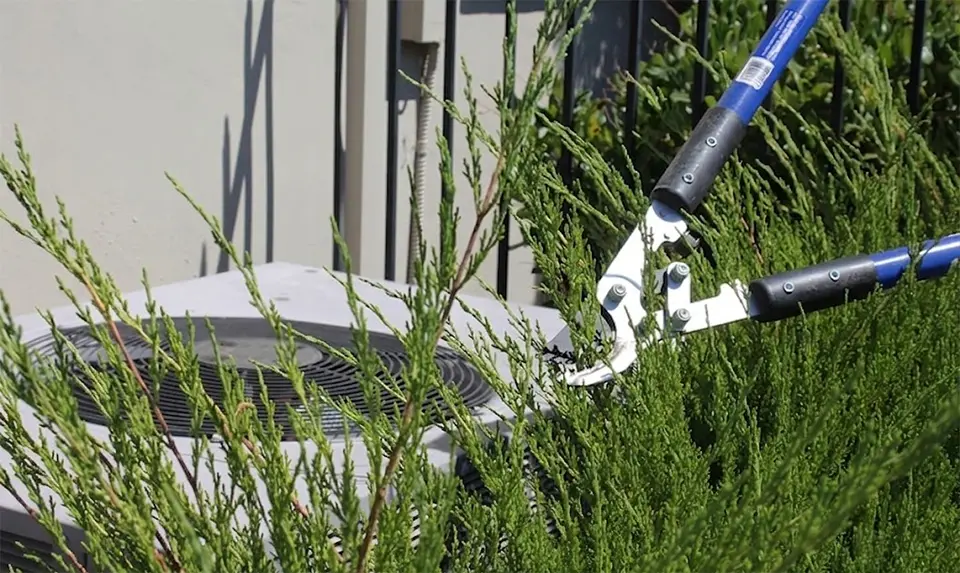
Grass clippings, weeds, leaves, dust, and debris collect around the condenser. Shrubs creep in too close. Storage bins, fencing, or landscaping cut off the airflow. When the outdoor unit can't breathe, it struggles to release heat, which raises operating pressures, drives up system temperatures, and makes overheating more likely.
Walk outside and take stock of the area around your condenser. Clear away the weeds, leaves, and loose debris. Trim plants back so the unit has open space on every side. Keep from stacking items against it. During mowing season, aim the grass clippings anywhere but into the unit.
A gentle rinse lifts some surface dirt, but deeper cleaning belongs in a professional visit. Condenser coils can be damaged when they're cleaned too aggressively or with the wrong method. A trained technician can clean the unit, inspect the fan, check the electrical components, and confirm the system is running safely.
Paradise homeowners know how fast dust, wind, and storms leave outdoor equipment filthy. A clean, clear condenser has a far better shot at keeping up when the temperature climbs.
Thermostat Habits That Help Your System Keep Up
When a home feels hot, most people want to jam the thermostat down. It feels like common sense. If 75 isn't cutting it, 68 should cool the house faster, right?
That's not how most standard residential systems work.
Setting the thermostat far below the temperature you actually want doesn't make the system cool faster. It just makes the AC run longer. During extreme heat, that adds strain without adding comfort. If the system is already fighting to hit 75, dropping it to 68 only piles on run time, energy use, and wear.
A moderate setting balances comfort against efficiency. Many energy-saving guidelines land around 78 degrees when people are home, with a higher setting once the house empties out. Every household is different, but the idea is simple. Don't ask the system to hold an extreme gap between indoors and outdoors during the hottest part of the day.
Programmable and smart thermostats help here. They let you shape temperatures around your schedule so the AC isn't cooling an empty house all afternoon. Some models learn your patterns or use your phone's location to adjust on their own.
Where the thermostat sits matters, too. Lamps, TVs, direct sun, and nearby appliances can skew the reading. If the thermostat feels extra heat, it may run the AC longer than needed. Keep heat-throwing items away from it, and flag any comfort concerns to your technician if it seems to misread the room.
Reduce Heat Inside Before It Reaches the AC
Your air conditioner can only do so much when the house is gaining heat all day. Cutting the heat load inside gives the system a better chance to keep up.
Close the blinds or curtains during the hottest stretch, especially on windows catching direct sun. That one habit makes rooms feel noticeably cooler. Spaces with big windows heat up fast, and that heat spreads through the rest of the house.
Check doors and windows for leaks. When cooled air escapes and hot outdoor air slips in, the AC runs longer to make up the gap. Weatherstripping, caulk, and small sealing repairs cut that waste. Attic insulation carries a lot of weight too. A hot attic radiates heat down into your living space, especially in older homes running thin on insulation.
Keep the supply vents open and clear. Furniture, rugs, curtains, or boxes block airflow and create uneven cooling. Closing vents in unused rooms sounds like a money-saver, but it disrupts the system's airflow and raises pressure in the ductwork. Your HVAC system is built to move a set amount of air, and blocking that air brings on comfort and efficiency problems.
Ceiling fans help by moving air across your skin. They don't actually lower the room temperature, so shut them off when the room's empty. While you're in the room, they may let you stay comfortable at a slightly higher thermostat setting.
Try to hold off on adding heat during peak afternoon hours. Ovens, dryers, and other heat-throwing appliances make the AC work harder. Shifting some of those tasks to the morning or evening pays off on the worst days.
Leaky Ducts Waste the Cool Air You Already Paid For
Ductwork rarely gets much thought because most of it hides out of sight. Yet duct leaks can hit your comfort and your bill hard.
When cooled air leaks into the attic, crawl space, garage, or wall cavities, it never reaches the rooms you're trying to cool. The AC keeps running because the thermostat stays unsatisfied, all while part of that conditioned air goes to waste. The result is uneven temperatures, longer run times, and higher utility bills.
Signs of duct trouble include rooms that never feel comfortable, weak airflow from certain vents, dusty indoor air, hot spots, or cooling bills that look too high for how much you run the system. Leaks near the air handler or around connections can be especially costly since they mess with system pressure and airflow.
A professional can inspect the duct system, find the leaks, and recommend proper sealing. Mastic or approved foil tape has its place in certain spots, but duct repair has to be done right. Standard cloth duct tape is no lasting fix for HVAC ductwork.
Solid ductwork lets your AC deliver the cooling you're already paying for. That makes the home more comfortable without pushing the equipment any harder.
Maintenance Beats an Emergency Repair
Nobody wants to call for AC repair on the hottest weekend of the summer. Schedules fill up quick, parts run in high demand, and the house turns miserable fast. Preventive maintenance trims that risk.
During a professional tune-up, a technician can inspect and clean the key components, check refrigerant levels, test the thermostat, examine electrical connections, evaluate airflow, inspect the condenser, and catch problems that are just starting to form. Those checks matter most before the system gets shoved into long summer run times.
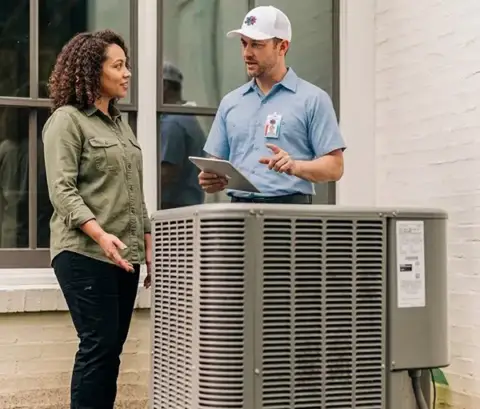
Maintenance sharpens efficiency, too. Dirty coils, weak capacitors, low refrigerant, clogged drain lines, and poor airflow all make an AC work harder than it needs to. Catching those early helps prevent breakdowns and can stretch the life of the system.
Older systems deserve extra attention. If your air conditioner is more than 10 to 15 years old, needs frequent repairs, or struggles every summer, maintenance can reveal whether repair or replacement makes more sense. A newer, efficient system may cool better, use less energy, and hold comfort more reliably. That call comes down to the condition of the equipment, the repair history, your comfort, and your budget.
Technicians from Empire Heating & Air won't just chase a quick fix. They'll help you understand what's happening, what can wait, and what needs attention now.
When to Call Empire Heating & Air Conditioning
Some AC issues start with homeowner troubleshooting. You can check the filter, confirm the thermostat is set right, make sure the vents are open, and clear the debris around the outdoor unit. When those steps don't help, it's time to call a professional.
Schedule service if the system blows warm air, shuts down again and again, makes unusual noises, leaks water, trips the breaker, freezes up, or can't cool the house even after the sun goes down. Call, too, if the bill climbs sharply or the system runs constantly without making the home comfortable.
Electrical smells, buzzing, grinding, screeching, or repeated breaker trips need quick attention. Those symptoms can point to serious mechanical or electrical trouble, and shutting the system off while you wait for service may head off more damage.
A system that overheats and restarts after cooling down still needs a look if the pattern repeats. A temporary recovery doesn't mean the equipment is healthy. It may be warning you ahead of a bigger failure.
Homeowners in Paradise, TX can count on Empire Heating & Air Conditioning for AC repair, maintenance, inspections, and honest recommendations. Whether your system needs a simple fix, seasonal service, a duct evaluation, or replacement guidance, getting help early protects your comfort and lowers the odds of a mid-summer breakdown.
Final Thoughts
Texas heat is rough on air conditioners, but homeowners aren't helpless. Checking the filter, keeping the outdoor unit clear, running reasonable thermostat settings, closing the blinds during peak sun, sealing air leaks, and scheduling maintenance all help your system perform better.
The biggest lesson is to notice the changes. If your AC has always cooled well but now runs all day without reaching the set temperature, something has shifted. If one room gets hotter every summer, the airflow or ductwork may need attention. If the bill jumps and comfort slides, the system may be working harder than it should.
Small problems rarely sort themselves out during a heat wave. They tend to show themselves once the equipment is under stress. Handling them early saves money, spares you the frustration, and keeps your home comfortable through the worst days of the year.
If your air conditioner is struggling in Paradise, TX, contact us today at (682) 233-3367 for dependable AC service. A professional inspection gives you clear answers, practical options, and a better shot at staying cool when the next wave of Texas heat rolls in.