

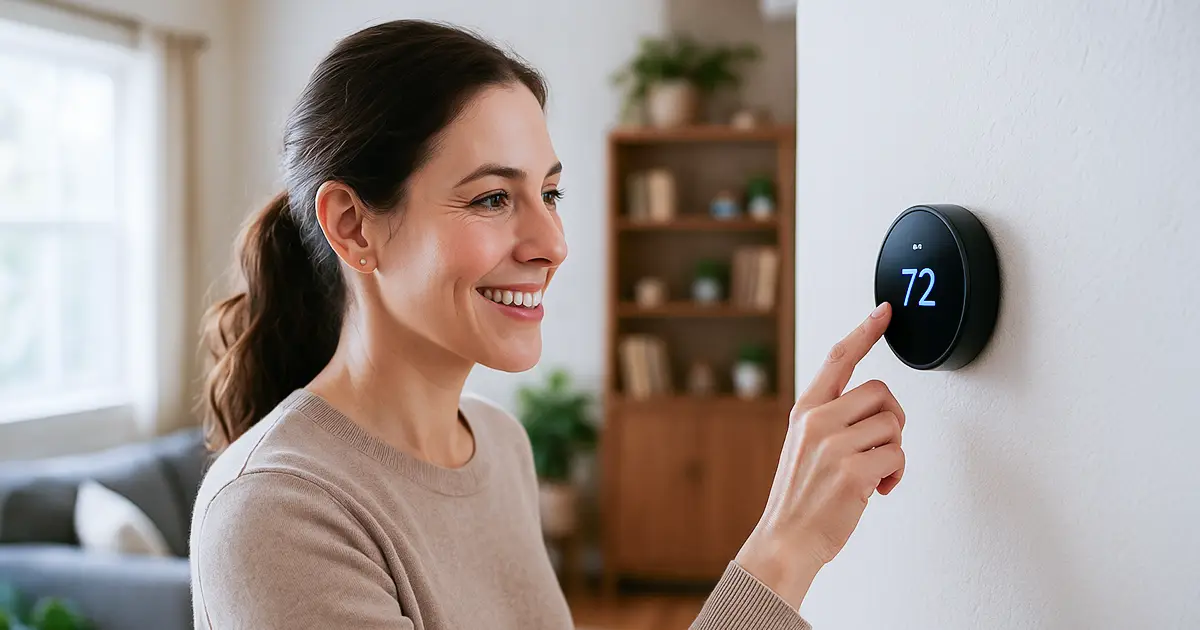
Here's something we see all the time: homeowners treating their thermostat like it's just a dial they twist when they're uncomfortable. Too hot? Turn it down. Too cold? Crank it up. Done.
But your thermostat is doing a lot more behind the scenes than you might think. And honestly? Most people are using it in ways that end up costing them money they don't need to spend.
If lower energy bills and better comfort sound good to you, it's worth taking a closer look at how you're actually using that little box on your wall. Let's talk about the mistakes we see most often, and what you should do instead.
The "Crank It" Myth
You walk through the door after a long day, and your house feels like an oven. So you set the thermostat to 65 degrees, figuring it'll cool down faster.
It won't.
Your HVAC system doesn't speed up just because you picked a lower number. It runs at the same pace no matter what. All you've done is told it to keep running longer, which means more energy used, more wear on the system, and a house that might end up colder than you wanted in the first place.
The smarter move? Use your thermostat's scheduling feature. Program it to start cooling about half an hour before you get home. That way, you walk into comfort without wasting energy or putting unnecessary stress on your equipment.
Should You Just Leave It Running All Day?
There's this idea floating around that it's better to leave your AC or heat on all day at a steady temperature instead of letting your house warm up or cool down when you're not there.
For most homes, that's not true. You're spending money to heat or cool an empty house; and chances are, you've set it to a temperature that's more extreme than it needs to be anyway.
Here in Paradise, TX, we get a lot of questions about this during spring and fall when the weather's all over the place. The better approach is to let your home's temperature drift a little when comfort doesn't matter. A few degrees warmer in summer when you're at work. A few degrees cooler at night in winter when you're under the covers.
That's where setbacks come in. They allow you to save money by not conditioning air when no one's around to appreciate it.
Heat Pumps Are a Little Different
If you have a heat pump, setbacks still work, but you need to be a bit more careful about how you use them.
Let's say it's winter, and you've let the house cool down overnight. If you wake up and bump the thermostat up by 10 degrees all at once, your heat pump might kick on its auxiliary heat. That's the electric resistance backup, and it'll warm you up fast... but, it'll also triple your heating costs for that cycle.
Heat pumps are incredibly efficient when they run in normal mode. You don't want to trade that efficiency for impatience.
The fix? Use smaller setbacks, or upgrade to a smart thermostat that knows how to gradually bring the temperature back up without triggering the expensive backup heat.
[include-promo]
Emergency Heat Isn't for Cold Weather
We get calls every winter from homeowners worried their heat pump "isn't working" because it's too cold outside. Sometimes they've already switched to emergency heat, thinking that's what you're supposed to do when temperatures drop.
It's not.
Modern heat pumps work just fine in cold weather, even well below freezing.
Emergency heat is only for actual emergencies, like when your heat pump has failed and you're waiting for us to come fix it. Otherwise, just leave your system on "Heat" and let it do what it was designed to do. It'll call for backup heat if it really needs it.
The Fan Setting You're Probably Getting Wrong
This one's big, especially during Texas summers.
If your fan is set to "On" instead of "Auto," it's running all the time... even when your AC isn't actively cooling. That means it's blowing air over the coil that still has moisture on it from the last cooling cycle, and all that water gets pushed right back into your house.
You're not just wasting energy. You're making your home more humid, which makes it feel warmer and less comfortable. In some cases, you're even creating conditions where mold can grow.
Set your fan to "Auto." Let it run only when the system is actually cooling or heating. Your home will feel better, and your energy bills will thank you.
Where Your Thermostat Lives Matters More Than You Think
If your thermostat is mounted on a wall that gets direct sunlight, or it's near a window, a lamp, or a TV, it's probably not reading your home's temperature accurately. It's reading the temperature of that spot, and that can throw off your entire system.
We've seen thermostats installed next to heat-generating appliances, on exterior walls that are colder than the rest of the house, even right above supply vents. All of those placements cause problems.
Your thermostat should be on an interior wall, in a central location, away from anything that radiates heat or cold. If your home has hot and cold spots no matter what you do, it might be time to talk about zoning or remote sensors that can give you better control.
Don't Forget the Thermostat Itself Needs a Little TLC
Thermostats don't require much, but they're not maintenance-free.
Dust can build up inside and mess with the sensor. Dead batteries can cause erratic behavior or shut the whole thing down. And sometimes, especially with older thermostats, the calibration just drifts over time.
Once a year, pop the cover off and give it a gentle cleaning. Check the batteries if it uses them. If something feels off but you can't figure out what, give us a call. A miscalibrated thermostat can cost you money every single month without you ever knowing it.
Why Smart Thermostats Actually Make Sense

A lot of homes around here still have the old manual dial-style thermostats. They still work, but they can't do much beyond turning your system on and off when the temperature drifts too far.
Smart thermostats are different. They learn your schedule, adjust automatically, and let you make changes from your phone when plans shift. Some even use your phone's location to start warming or cooling your house when you're on your way home.
You get detailed energy reports, so you can see exactly where your money's going. And because they're designed to avoid the kinds of mistakes we've been talking about (like triggering backup heat unnecessarily or running the fan when it shouldn't) they tend to pay for themselves pretty quickly.
Small Changes That Add Up
You don't have to overhaul your whole system to see a difference.
Wear a sweater in winter so you can drop the heat a degree or two. Run a ceiling fan in summer so you don't have to set the AC quite as low. Each degree you adjust is about 3-5% off your energy bill.
And take care of the basics: keep your vents clear, change your filters every month or two, and schedule maintenance with us twice a year. If your house still can't hold a comfortable temperature, there might be a bigger issue such as ductwork, insulation, or equipment that's the wrong size for your home. We can help you figure out what's going on.
Final Thoughts
We've worked with hundreds of families in the Paradise area, and more often than not, the solution to high bills and uncomfortable rooms starts with the thermostat. Sometimes it's just about using it smarter. Sometimes it's about upgrading to something better.
If you're ready to take control of your comfort and your energy costs, we're here to help. Whether you need a smart thermostat installed, want someone to troubleshoot why your system's acting up, or just want advice on how to get better performance out of what you already have, give Empire Heating & Air a call at (682) 233-3367. Let's make your home work better for you!